IMAP is glad to be part of the MOF4AIR project, check our project video!

video here

Decades of combustion of fossil fuels and CO2 emissions have made climate change one of the most serious challenges that humanity has to face today. The development of a strong CCUS chain (for Carbon Capture, Utilisation and Storage) is a solution to capture carbon dioxide before it is even emitted into the atmosphere and therefore minimize human greenhouse gas (GHG) emissions.

The MOF4AIR project:
The MOF4AIR project is a project financed by the European Commission to develop and demonstrate a new solution to capture more efficiently carbon dioxide from power plants and industries. To do so, MOF4AIR uses carbon dioxide adsorption with innovative porous sorbents called Metal-organic frameworks (MOFs) that have shown promising potential for selective removal of carbon dioxide from exhaust gases. However, MOFs have so far not been properly tested in the harsh industrial conditions present in real exhaust gases and at the exposure times needed to be used in real CO2 capture processes. The purpose of the MOF4AIR project is thus to test the performances of MOFs in real industrial operation in order to support the progress of carbon capture and the decarbonization of the industry and power supply through CCUS.

This video presents the MOF4AIR project.

More information
Useful links:
– Visit our Website: https://www.mof4air.eu/

– Follow us on LinkedIn: https://www.linkedin.com/company/mof4…

– Follow us on Twitter: https://twitter.com/mof4air

– Contact us: contact@mof4air.eu

Project duration: July 2019 – July 2023
Partners: University of MONS, SINTEF, Centre National De La Recherche Scientifique (CNRS), Politecnico di Milano, Centre for Renewable Energy Sources And Saving Foundation, SiKEMIA, MOF Technologies Limited, Korea Research Institute of Chemical Technology (KRICT), ENG TECH Co., Technology Centre Mongstad, SOLAMAT MEREX, Türkiye Petrol Rafinerileri A.Ş. (Tüpraş), Euroquality, Türkiye Çimento Müstahsilleri Birliği.
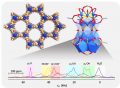
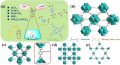
New article: Natural Abundance Oxygen-17 Solid-State NMR of Metal Organic Frameworks Enhanced by Dynamic Nuclear Polarization

The 17O resonances of Zirconium-oxo clusters in porous Zr carboxylate metal-organic frameworks (MOFs) have been investigated by magic-angle spinning (MAS) NMR spectroscopy enhanced by dynamic nuclear polarization (DNP) at natural abundance. The assignment is supported by density functional theory (DFT) calculations of chemical shifts and quadrupolar parameters.

Une synthèse éco-compatible de solides hybrides poreux !

Press Release (in french) : Communiqué


One-step versatile room temperature synthesis of metal(IV) carboxylate MOFs

Shan Dai[a,b],Farid Nouar[a], Sanjun Zhang[b], Antoine Tissot*[a], Christian Serre*[a]

[a] S. Dai, Dr. F. Nouar, Dr. A. Tissot, Dr. C. Serre Institut des Matériaux Poreux de Paris, UMR 8004 Ecole Normale Supérieure, ESPCI Paris, CNRS, PSL University, 75005, Paris, France

[b] S. Dai, S.J. Zhang State Key Laboratory of Precision Spectroscopy, East China Normal University, No. 3663, North Zhongshan Road, Shanghai 200062, China

Angew. Chem. Int. Ed. 2020, accepted article, https://doi.org/10.1002/anie.202014184

Contact Chercheur : Antoine Tissot, antoine.tissot@ens.psl.eu; Christian Serre, christian.serre@ens.psl.eu

Contact Communication Chimie :
communication.chimie@ens.psl.eu
Département Chimie ENS (www.chimie.ens.psl.eu)

A Mesoporous Zirconium-Isophthalate Multifunctional Platform

Press Release (in french) : Communiqué


References :
A Mesoporous Zirconium-Isophthalate Multifunctional Platform
Sujing Wang, Liyu Chen,Mohammad Wahiduzzaman, Antoine Tissot,Lin Zhou,IlichA.Ibarra,Aída Gutiérrez-Alejandre,Ji Sun Lee,Jong-San Chang,Zheng Liu,JérômeMarrot,William Shepard, Guillaume Maurin,Qiang Xu,Christian Serre
DOI:10.1016/j.matt.2020.10

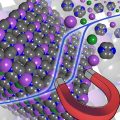
Metal-organic magnets with large coercivity and ordering temperature up to 242°C


Press Release (in french) : Communiqué


References:
Metal-organic magnets with large coercivity and ordering temperature up to 242°C
Panagiota Perlepe, Itziar Oyarzabal, Aaron Mailman, Morgane Yquel, Mikhail Platunov, Iurii Dovgaliuk, Mathieu Rouzières, Philippe Négrier, Denise Mondieig, Elizaveta A. Suturina, Marie-Anne Dourges, Sébastien Bonhommeau, Rebecca A. Musgrave, Kasper S. Pedersen, Dmitry Chernyshov, Fabrice Wilhelm, Andrei Rogalev, Corine Mathonière and Rodolphe Clérac
Science 2020; 30 Octobre
DOI: 10.1126/science.abb3861

New pre-print: « A Mesoporous Zirconium-Isophthalate Multifunctional Platform »

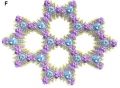
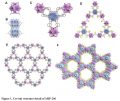
Mesoporous materials suffer from limitations including poor crystallinity and hydrolytic stability, lack of chemical diversity, insufficient pore accessibility, complex synthesis and toxicity issues. Here the association of non-toxic Zr-oxo clusters and feedstock isophthalic acid (IPA) via a Homometallic-Multicluster-Dot strategy results in a robust crystalline mesoporous MOF, denoted as MIP-206, that overcomes the aforementioned limitations. MIP-206, built up from an unprecedented combination of Zr6 and Zr12 oxo-cluster inorganic building units into a single structure, exhibits accessible meso-channels of ca. 2.6 nm and displays excellent chemical stability under different hydrolytic and harsh conditions. Owing to the abundant variety of functionalized IPA linkers, the chemical environment of MIP-206 can be easily tuned without hampering pore accessibility due to its large pore windows. As a result, MIP-206 loaded with palladium nanoparticles acts as an efficient and durable catalyst for the dehydrogenation of formic acid under mild conditions, outperforming benchmark mesoporous materials. This paves the way towards the utilization of MIP-206 as a robust mesoporous platform for a wide range of potential applications. 10.13140/RG.2.2.27305.21600

New article: Metal–Organic Frameworks and Water: ‘From Old Enemies to Friends’?

MOFs’ hydrolytic stability together with high versatility and modularity has promoted them as highly promising candidates for water-related applications of high societal interest and other emerging fields. S-shaped water isotherms and the finely tuned hydrophilic character of MOFs are key parameters for heat reallocation and water harvesting applications, while increased hydrophobicity is expected for separation occurring under wet conditions. Bearing suitable functional groups (e.g., –SO3H, –COOH, –NH2) that are geometrically precisely distributed, MOFs can show high proton conductivity outperforming benchmark materials. https://doi.org/10.1016/j.trechm.2020.09.004

New pre-print on MedRXiv: SARS-CoV-2 Inactivation Potential of Metal Organic Framework Induced Photocatalysis

https://doi.org/10.1101/2020.10.01.20204214
As the world recovers from the lockdown imposed by the Severe Acute Respiratory Syndrome Coronavirus 2 (SARS-CoV-2) pandemic, returning to shared indoor spaces is considered a formidable risk. It is now clear that transmission of SARS-CoV-2 is driven by respiratory microdroplets expelled by infected persons, which can become suspended in the air. Several layering technologies are being explored to mitigate indoor transmission in the hopes of re-opening business, schools and transportation systems. Here we coupled the water adsorptive and photocatalytic capacity of novel Metal Organic Frameworks (MOFs) to demonstrate the capture and inactivation of SARS-CoV-2. Discussion is given on the methods of analysis and the differences between the photocatalytic activity of several MOFs, and the difference between MOF induced photocatalysis and ultra violet photolysis of SARS-CoV-2. Our results are intended to provide support to industry looking for alternative methods secure indoor spaces.

Faraday Discussion on MOFs for energy and environmental applications

Angelika Mielcarek Defense

Surface engineered hybrid nanocarriers for cancer treatment

Par Angelika Maria MIELCAREK, jeu. 14 mai 2020 14:00 – 18:00 (CEST)
Thèse de doctorat de PSL Research University préparée à l’École Normale Supérieure de Paris et à l’Université Paris-Sud
ÉCOLE DOCTORALE 397, spécialité: Chimie Matériaux et Sciences pharmaceutiques

Metal-Organic Frameworks nanoparticles (nanoMOFs) are porous crystalline materials of interest for biomedicine applications. Particularly attractive ones are MIL-100(Fe) iron carboxylate nanoparticles (NPs). Despite many advantages, these NPs tend to aggregate in physiological media and accumulate in organs after intravenous administration. In this work, we investigated the impact of different surface modifications route (covalent and non-covalent) on the colloidal stability of MIL-100(Fe) NPs in physiological media and the ability of the coatings to tune the in vivo biodistribution and pharmacokinetics of NPs. We also investigated different synthesis route to decrease the size of the NPs, in a view of reducing the macrophage recognition. Finally, we studied the encapsulation and release of anticancer drug, Methotrexate (MTX), into magnetic core-shell nanoMOFs-iron oxide NPs and the toxicity evaluation of molecules based on C.elegans worms.

 
Participez à ma réunion depuis votre ordinateur, tablette ou smartphone.
https://global.gotomeeting.com/join/311894549
Vous pouvez aussi appeler à l’aide de votre téléphone.
États-Unis: +1 (872) 240-3412
Code d’accès: 311-894-549

Rejoignez la réunion depuis une salle ou un système de vidéoconférence.
Composez le 67.217.95.2 ou tapez inroomlink.goto.com
Identifiant de la réunion: 311 894 549
Ou composez directement le: 311894549@67.217.95.2 ou 67.217.95.2##311894549

Vous n’utilisez pas encore GoToMeeting ? Téléchargez l’application dès maintenant et soyez prêt pour votre première réunion :
https://global.gotomeeting.com/install/311894549